
Deity Shoes v. Mundorama Confort and Stay Design
The judgment of the Court of Justice of the European Union ("CJEU") dated 18 December 2025 in case C‑323/24 resolves several preliminary questions raised by the Commercial Court No. 1 of Alicante in the context of a dispute between Deity Shoes, S. L. ("Deity Shoes"), owner of various Community designs relating to footwear, and the companies Mundorama Confort, S. L. ("Mundorama Confort") and Stay Design, S. L ("Stay Design").
Deity Shoes brought an action before the referring court for infringement of various registered and unregistered Community designs relating to footwear. According to the claimant, the defendants had placed designs on the market that reproduced the appearance of its designs. However, Mundorama Confort and Stay Design in turn filed a counterclaim seeking the invalidity of the designs in question, arguing that they did not meet the essential requirements for protection, namely novelty and individual character within the meaning of Articles 5 and 6 of Council Regulation (EC) No 6/2002 of 12 December 2001 on Community designs ("Regulation No 6/2002"). The defendants argued that Deity Shoes' designs were not the result of its own creative process, but were derived from models offered by Asian suppliers, whose catalogues allowed a choice of standardised elements.
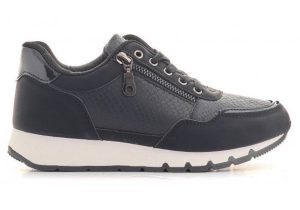 The referring body acknowledged that Deity Shoes' designs did indeed come almost entirely from Chinese suppliers' catalogues, with only minimal and incidental modifications. This led it to consider whether such a design could benefit from the protection provided for in Regulation No 6/2002. It also pointed out that, in a sector so sensitive to price and volume, companies rarely introduce changes because they make the product more expensive, and that the designs follow widespread fashion trends, which facilitates their mass sale at low cost. The court therefore questioned whether these trends could limit the designer's freedom and allow very small differences to be sufficient to establish unique character.
Therefore, Commercial Court No. 1 of Alicante decided to suspend the proceedings and refer the following four questions to the CJEU for a preliminary ruling:
- Whether, in order for a design to be protected, there must be genuine design activity, and whether the simple combination of predetermined components from trading catalogues can be considered as such, when the modifications are merely minor.
- Whether a design based on catalogues and barely modified can be considered unique under Article 6 of Regulation No. 6/2002, and whether it matters that the components were not designed by the owner.
- Whether someone who only minimally customises a model offered by a supplier can be considered the author under Article 14 of Regulation No 6/2002, and whether a minimum degree of customisation should be required to claim such authorship.
- Whether fashion trends limit the author's freedom — allowing small differences to be sufficient to create a different overall impression — or, on the contrary, reduce the importance of fashion-dictated elements when assessing uniqueness.
In answering the first and third questions referred for a preliminary ruling, the CJEU points out that, although the referring court formally referred to Article 14 of Regulation No 6/2002 when raising the third question, this does not limit its analysis, as it can provide all the interpretation of EU law necessary to resolve the case. It is clear from the questions referred that the court wishes to clarify the scope of the protection requirements laid down in Articles 4 to 6 of the Regulation: in particular, how novelty and individual character are to be understood, and whether recognition of the status of author requires proof of a certain degree of personalisation that significantly distances the final design from the previous model in the trading company's catalogue. Thus, the first and third questions, which are analysed together, focus on determining whether the owner of a design is required to demonstrate, in addition to those material requirements, the existence of a minimum degree of design or intellectual effort of their own in order to obtain Community protection.
Firstly, the CJEU recalls that the very definition of a design, based exclusively on its appearance, shows that the protection afforded by the Regulation does not require an assessment of subjective creativity, but rather a comparison of the design with the prior art to verify that it is new and produces a different overall impression on the informed user, taking into account its degree of freedom, which may be restricted by technical factors. Thus, the CJEU concludes that Articles 4 to 6 do not impose any additional requirements such as demonstrating a minimum level of design: it is sufficient that novelty and individual character are present. Finally, it clarifies that the reference to the 'author' in Article 14 only identifies the right holder and does not introduce an obligation to prove creativity or additional intellectual contribution.
With regard to the second and fourth questions referred for a preliminary ruling, the CJEU points out that individual character is assessed by comparing the overall impression of the design with that caused by each prior design considered individually; the comparison cannot be constructed as a sum of isolated features taken from several prior designs, nor can the design of the product be compared with the designs of its parts separately. Consequently, a design may combine elements of pre-existing designs provided that, taken as a whole, it produces a different overall impression; and this logic is consistent with the fact that protection does not require proof of a minimum degree of design. Therefore, the origin in catalogues and specific modifications do not in themselves exclude the unique character of Article 6 of Regulation No 6/2002.
On the other hand, the CJEU raises the question of whether, in this context, fashion trends can influence the degree of freedom of the author, so that minor differences between, on the one hand, one or more earlier designs and, on the other hand, the contested design, may be sufficient for the latter to produce in the informed user an overall impression different from that produced by those earlier designs, or whether, on the contrary, the elements resulting from such trends may be of lesser importance in the overall impression produced in the informed user. In this regard, the CJEU distinguishes, first, between technical or regulatory limitations, which may restrict the designer's freedom to the extent that minor differences are sufficient to produce a different impression. And, secondly, it distinguishes fashion trends, which are neither inevitable nor permanent and therefore do not reduce that degree of freedom. Fashion, by its very changing nature, does not justify lowering the threshold of differentiation required to appreciate uniqueness.
It also adds that it cannot be argued that fashion-dictated elements are less important in the overall impression: the informed user is not an average consumer, but someone with knowledge of the sector and a high level of attention, so that the widespread nature of certain features due to fashion does not mean that they pay less attention to them. The possible ubiquity of 'fashionable' elements may influence aesthetic perception or commercial success, but it is not relevant for the legal assessment of uniqueness. It therefore concludes that fashion trends do not limit the designer's freedom (so minor differences are not sufficient) and do not make their features less important in the overall impression. The task of the national court is to determine whether the differences from previous designs are sufficient to create a different overall impression on the informed user, or whether they are merely insignificant details.
In view of the above, the CJEU concludes:
- Regulation (EC) No 6/2002, and, in particular, Articles 4 to 6 thereof, in the light of Article 14 of that Regulation, must be interpreted as meaning that, in order to enjoy the protection conferred on a Community design, the holder or creator of that design is not required to prove, in addition to the requirements of novelty and individual character, that it results from a minimum degree of design.
- Article 6 of Regulation 6/2002 must be understood as meaning that neither the fact that a design comes from a catalogue with only minor modifications nor the fact that it follows fashion trends prevents it from being recognised as having individual character. Trends do not reduce the designer's freedom or diminish the importance of the elements derived from them in the overall impression perceived by the informed user.