
CJEU sets the originality standard in furniture design: Mio and USM Haller cases
Mio AB, Mio e-handel AB, Mio Försäljning AB y Galleri Mikael & Thomas Asplund Aktiebolag (C-580/23)
USM U. Schärer Söhne AG y Konektra GmbH, LN (C-795/23)
A double case of design law in which originality plays -again-, a stellar role, addressed by the Court of Justice, which once again explains to us that it is an autonomous concept of Union law, trying to specify how this originality is appreciated, with little success.
The Court of Justice of the European Union (CJEU), in this judgment, rules on two qurequests for a preliminary ruling submitted by the courts of Sweden and Germany, arising in the context of two disputes: the first, between the Swedish companies Mio AB, Mio e-handel AB and Mio Försäljning AB (Mio) and Galleri Mikael & Thomas Asplund Aktiebolag (Asplund); and, the second, between the Swiss company USM U. Schärer Söhne AG (USM) and the German konektra GmbH (Konektra). Both cases concern alleged copyright infringements in works applied to industry, in particular furniture designs, and seek an interpretation of Articles 2 to 4 of Directive 2001/29/EC on the harmonisation of copyright in the information society.
Case C-580/23
First, Asplund, a Swedish company engaged in the design and manufacture of home furniture, sued Mio, a company involved in the retail sale of furniture and home goods, on the grounds that the tables in the "Cord" series bore substancial similarities to its "Palais Royal" tables. Asplund claimed that these tables were protected by copyright as works of applied art. The court of first instance upheld the action brought by Asplund, recognizing the protection of the "Palais Royal" and declaring that Mio had infringed those rights. Mio, subsequently, appealed the decision.
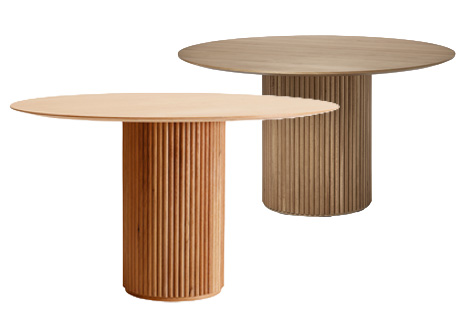 The Swedish Court of Appeal, when reviewing the case, raised doubts regarding the criteria for determining the originality of an object of applied art and its protection as a "work" under Directive 2001/29. The court noted that, although originality requires that the reflect the author’s personality through free and creative choises that are not dictate by technical limitations, this could still exist even in the presence of certain technical restrictions.
However, given the lack of clarity on how to make this assessment concrete and what factors should be considered to verify whether an object meets this requirement, the court decided to stay the proceedings and refer a series of questions to the CJEU for a preliminary ruling. The aim was to clarify the interpretation of the concept of "work" in the field of applied arts under Directive 2001/29, defining the criteria for assessing originality – whether the creative process or the final result should be taken into account, and the relevance of elements such as inspiration, the use of common forms or the existence of similar objects, as well as to establish guidelines for determining the infringement, specifying whether the general impression was sufficient or whether the recognizable reproduction of creative elements was necessary, and what is the incidence of the degree of originality and the existence of independent creations. In particular, the following questions were raised:
- In order to assess whether an object of applied art qualifies, as a work, the broad protection conferred by copyright provided for in Articles 2 to 4 of Directive [2001/29], how should the question of whether the object reflects the personality of the author, expressing his free and creative decisions, be examined? What factors should or should be taken into account? In this context, the question arises specifically as to whether the examination of originality should be based on factors relating to the creative process and the presentation of the decisions actually made by the author in creating the object or on factors relating to the object itself and the final result of the creative process, and whether the object itself reflects an artistic achievement.
- In order to answer the first question, and in particular whether an object of applied art reflects the author’s personality by expressing his or her free and creative choices, what relevance is to be attached to the fact that:
- the object is composed of elements that form part of the general body of designs,
- the object develops already known designs or models and constitutes a variation of these or of a current design trend,
- have identical or similar objects been created before or — independently and without knowledge of the object of applied art claimed to enjoy protection as a work — after the creation of the object at issue?
- How is the similarity assessment to be carried out — and what degree of similarity is required — when examining whether an allegedly infringing object of applied art ... falls within the scope of protection of a work and infringes the exclusive right in the work which, under Articles 2 to 4 of Directive [2001/29], is the responsibility of the author? In this context, the question arises specifically as to whether the examination should focus on whether the work is recognizable in the allegedly infringing object or whether the allegedly infringing object gives the same overall impression as the work, or, if not, on what other aspects the examination should focus.
- In order to answer the third question and the question whether an allegedly infringing object of applied art ... falls within the scope of protection of a work and infringes the exclusive right in the work, what is the relevance of:
- the degree of originality of the work with respect to the scope of protection of the work,
- the fact that the allegedly infringing work and object of applied art ... consist of elements that are found in the general design heritage or develop already known designs or constitute variations of those designs or of a current trend in design,
- the fact that other identical or similar objects were created before or — independently and without knowledge of the work — after the creation of the work?'
Case C-795/23
On the other hand, the Swiss company USM, creator of the modular furniture system "USM Haller", brought proceedings against the German Konektra for copyright infringement and unfair competition. Konektra was initially dedicated to selling compatible spare parts for the USM Haller system, but in 2018, it expanded its activity by offering all the components necessary for the complete assembly of USM Haller furniture, along with assembly services and instructions, which prompted USM to initiate legal proceedings. The court of first instance upheld the claim, but the German high court dismissed it, finding that the USM Haller system was not a work of applied art protected by copyright in accordance with the case-law of the CJEU (in particular, the judgments of 12 September 2019, Cofemel (C-683/17, EU:C:2019:721), and of 11 June 2020, Brompton Bicycle (C-833/18, EU:C:2020:461)).
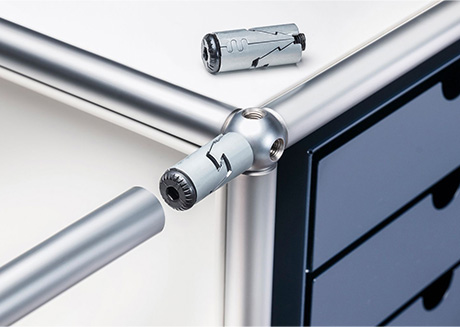 The German Federal Supreme Court, in response to the appeal of both parties, suspended the proceedings and referred a series of questions to the CJEU to clarify the interpretation of the concept of originality in works of applied art. In particular, it asked whether there was a rule-exception relationship between copyright and design protection that would require a higher standard; whether the subjective point of view of the author and conscience should be considered in the adoption of free and creative decisions; and whether post-creation circumstances, such as museum exhibition or specialized recognition, could be assessed when examining originality. In particular, the following questions were referred for a preliminary ruling:
- In the case of works of applied art, is there a rule-exception relationship between the protection of designs and that of copyright, such that, when examining the originality of such works from the perspective of copyright, stricter requirements must be imposed on the free decisions of the creator than for other types of works?
- When examining originality from the perspective of copyright, should the creator's subjective point of view of the creative process be (also) taken into account and, in particular, should the creator consciously make free and creative decisions in order to be considered free and creative decisions for the purposes of the case law of the Court of Justice of the European Union?
- If the assessment of originality is to focus primarily on whether the work objectively expresses an artistic creation, is it also permissible, for the purposes of that assessment, to have regard to circumstances arising after the time at which the design was created—this being the decisive moment for evaluating originality—such as the presentation of the design in art exhibitions or museums, or its recognition within specialist circles?'
Ruling of the CJEU
- First question (C-795/23): relationship between copyright and designs
Thus, the request for a preliminary ruling raises the question whether, under Directive 2001/29, there exists a rule–exception relationship between the protection of designs and that of copyright, such as to require a higher standard of originality for works of applied art.
t should be recalled that this question stems from the traditional approach under which industrial designs were required to display a so-called enhanced “artistic height” in order to benefit from copyright protection, as opposed to ordinary works. In other words, the object had to exhibit a greater artistic than industrial character in order to qualify for this dual system of protection. Although the artistic criterion has long since been abandoned in the field of copyright, it continues to be invoked, not without reason, as will be seen, since in the absence of such inherently subjective criteria, it becomes difficult to identify the requisite level of originality.
The CJEU rejects that approach and recalls that the concept of a “work” within the meaning of Article 2(a) of Directive 2001/29 constitutes an autonomous and uniform notion of EU law, requiring the cumulative fulfilment of two conditions: (i) originality –in the sense that the subject matter is the author’s own intellectual creation, reflecting his or her personality through free and creative choices not dictated by technical constraints–; and (ii) the expression of that intellectual creation in a manner that is identifiable with sufficient precision and objectivity.
On the other hand, the protection of designs and models (derived from Directive 98/71 and Regulation No 6/2002) is based on objective criteria of novelty and uniqueness, evaluated against earlier designs. This protection seeks to safeguard new and functional objects, designed for mass production, for a limited time that allows the investment to be recovered without excessively restricting competition.
By contrast, copyright protection lasts much longer and is reserved for works that reflect the author's personal imprint. Both protections pursue different purposes and should not impair the effectiveness of each regime. There is no automatic link between the two and no rule-exception relationship: the requirements are different (novelty and singularity vs. originality).
The CJEU points out that both protections are not mutually exclusive, and can be granted cumulatively to the same subject matter in a limited way, that is, when the author creates a unique work that bears the imprint of his personality, which will be protected under Directive 2001/29. Therefore, it must be considered that a design can be classified as a "work", if the requirements of originality and intellectual creation of the author are met. In view of the above, the CJEU concludes that there is no rule-exception relationship between the protection of designs and that of copyright, and, therefore, a stricter standard of originality is not required for applied arts; it is enough to meet the requirements of originality and identifiable expression of intellectual creation.
It should be noted that originality is a concept akin to pregnancy, either you are or you are not. An object cannot be a little or very original. Either it is or it is not.
- First and second questions in Case C-580/23 and second and third questions in Case C-795/23 - Questions of originality
The questions referred for a preliminary ruling focus on how to interpret the concept of "work" in the applied arts under Articles 2(a), 3(1) and 4(1) of Directive 2001/29 and what criteria should be applied to assess originality. The CJEU clarifies that originality requires that the object reflects the personality of the author through free and creative decisions; If the form is dictated by technical, ergonomic, safety limitations or by sectoral standards that eliminate freedom of choice, there is no work. In this regard, the CJEU recalls that an object that meets the requirement of originality can enjoy copyright protection, even if its realization has been partially determined by technical considerations, provided that this determination has not prevented its author from reflecting his personality in it, expressing free and creative decisions.
It also indicates that the assessment must be based on the object itself and on the decisions expressed in its form, not on ideas or on the mere intention of the author. In any case, a relevant aesthetic or artistic effect is not enough to prove originality. Factors such as the use of common forms, inspiration from previous models, the existence of similar creations or subsequent recognition are not decisive or necessary, although they can be taken into account.
In short, a "work" is the object that bears the personal imprint of the author and manifests visible free and creative decisions, while decisions dictated by technical requirements or that do not provide uniqueness do not meet the requirement of originality. It therefore concludes that, in order for an object of applied arts to be considered a protected "work", it must reflect the personality of the author through free and creative decisions, not imposed by technical limitations.
Here the Court clearly explains what it is not. It is much easier than explaining what it is. The questions asked by the Swedish Court were undoubtedly precise and extensive: How should the question of whether the object reflects the author's personality, manifesting his free and creative decisions, be examined? What factors should or should be taken into account? The CJEU repeats for the umpteenth time that the originality is to be found in free and creative decisions that reflect the personality of the author, so that it returns us to the question: Okay, but it still does not answer how this examination should be carried out to validate the projection of the author's personality on the work.
- Third and fourth questions in Case C-580/23 - Questions of infringement
The questions referred concern the criteria for determining the existence of copyright infringement in respect of works of applied art. As a preliminary point, the Court of Justice of the European Union recalls that, in the field of copyright, infringement arises from the use of a work without the author’s consent. Accordingly, it states that, in order to establish the existence of an infringement, it is necessary that the allegedly infringing object incorporates, in a recognisable manner, original creative elements of the protected work without authorisation, even if those elements constitute only a minor part thereof.
It also indicates that, in order to declare an infringement, the general visual impression or the degree of originality of the work is not sufficient. It is necessary to check whether the infringing object recognisably incorporates original creative elements of the protected work. The mere possibility of similar creations does not preclude protection. As regards the common sources of inspiration for the two objects at issue, it notes that, where the two objects in question are inspired by the same work or an earlier design, only the "new" creative elements will be original in the derivative work and only the reproduction of those new elements will constitute a potential copyright infringement. In addition, it clarifies that the mere fact of following the same artistic trend as the author of an earlier work does not constitute such an infringement in the absence of the incorporation of concretely identifiable creative elements of that earlier work.
In view of the above, the CJEU concludes that, in order to find the existence of an infringement of copyright, it is necessary to determine whether creative elements of the protected work are recognised in the allegedly infringing object. Thus, the possibility of a similar creation cannot justify the denial of protection.
The judgment reinforces the view that copyright protection for works of applied art is not subject to stricter requirements than for other works. The key is originality, understood as the expression of the author's personality through free and creative choises, and not mere novelty or uniqueness. In order to establish infringement, it must be shown that there is a recognisable reproduction of original creative elements, rather than a mere visual similarity. This doctrine unifies the standard of protection in the European Union and provides legal certainty to both creators and operators in the design market.
Our conclusion
Without a doubt, a clarifying overview of the relationship between the two worlds, that of design law and that of copyright, but we still do not know how to evaluate when there is expression of the author's personality or what free and creative decisions can shape that reflection of the personality. In copyright, we face the same dilemma as St. Augustine regarding time: “What is time? If no one asks me, I know. If I wanted to explain it to the one who asks me, I don't know”.
Well, what is originality? We intuit it, but if we seek to explain or describe it, we cannot do so without reaching for everything we wish to exclude from the concept: merit, art, beauty, complexity or, even, price.