
TJUE – Pastiche
The judgment defines the distinct concept of "pastiche" under EU law, establishing that the exception is not a catch-all provision but rather requires a recognizable artistic or creative dialogue with the pre-existing work, without it being necessary to prove the user’s subjective intent
The judgment of the Court of Justice of the European Union (hereinafter, CJEU) of April 14, 2026, resolves the preliminary ruling requested by the Bundesgerichtshof (Federal Court of Justice of Germany) regarding the interpretation of Article 5, (3)(k) of Directive 2001/29/EC of the European Parliament and of the Council of May 22, 2001, on the harmonization of certain aspects of copyright and related rights in the information society (hereinafter, the “InfoSoc Directive”).
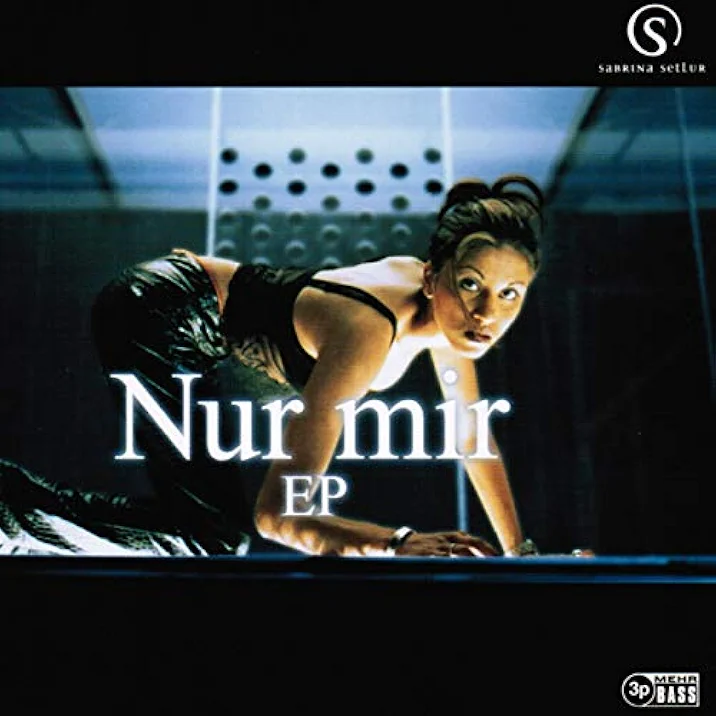 The main proceedings involve CG and YN—the successor in title to RL—versus Pelham GmbH, SD, and UP (hereinafter collectively “Pelham and others”), regarding the use, in the recording of the song “Nur mir,” composed by SD and UP and produced by Pelham, of a rhythmic sequence of approximately two seconds taken from the phonogram of the group Kraftwerk, of which CG and RL are founders.
The song “Nur mir” was released on phonograms produced by Pelham in 1997, whereas Kraftwerk had released a phonogram in 1977 that included the song “Metall auf Metall.” According to CG and YN, Pelham and his partners electronically sampled a roughly two-second segment of the rhythmic sequence from “Metall auf Metall” and used it in a continuous loop in the song “Nur mir.”
Following an initial action brought before the Landgericht Hamburg (Hamburg Regional Court)—which was upheld—and subsequent appeals to the Oberlandesgericht Hamburg and the Bundesgerichtshof itself, the case reached the Bundesverfassungsgericht (Federal Constitutional Court), which annulled the decisions issued by the lower court and remanded the case for reconsideration. In the context of that third round of proceedings, the Bundesgerichtshof referred a first question for a preliminary ruling to the CJEU, which led to the judgment of July 29, 2019 (Pelham and Others, C-476/17), in which the CJEU held that the producer of a phonogram may object to the use of any sound sample, even if very brief, if it is recognizable to the ear and is not incorporated in a sufficiently modified form, by virtue of the exclusive right of reproduction under Article 2(c) of Directive 2001/29, interpreted in light of the Charter of Fundamental Rights of the European Union. Furthermore, it clarified that a phonogram containing samples taken from another does not constitute a “copy” under Article 9(1)(b) of Directive 2006/115 when it does not reproduce the whole or a substantial part of the original phonogram.
Following the annulment in 2020 of the appellate court’s judgment, the Oberlandesgericht Hamburg reexamined the case and distinguished three time periods: the period prior to the transposition of Directive 2001/29—during which it ruled out any infringement—as Directive 2001/29 was not yet applicable; the period between the end of the transposition deadline and the entry into force of Article 51a of the German Copyright Act (UrhG) on June 7, 2021—during which it found an infringement of phonogram production rights through the use of a recognizable and protected rhythmic sequence and ordered the compensation accordingly—; and the period after that date, during which it ruled out any infringement, holding that the sampling of the rhythmic sequence constituted a use for the purposes of “pastiche,” covered by the aforementioned provision.
CG and YN filed an appeal before the Bundesgerichtshof regarding the part of the judgment that dismissed their claims concerning the period after June 7, 2021. The Bundesgerichtshof, finding that the reproduction of the rhythmic sequence did not meet the requirements of either “caricature” or “parody”—since nothing suggested that the song “Nur mir” constituted an expression of humor or mockery— considered whether that reproduction could be covered by the “pastiche” exception under Article 5(3)(k) of Directive 2001/29.
In this context, the referring court referred two questions for a preliminary ruling to the CJEU:
- First, it asked whether this exception has a residual nature and can cover any artistic engagement with a pre-existing work, including sampling, or whether, on the contrary, this concept is subject to restrictive criteria such as the requirement of humor, stylistic imitation, or homage. This is decisive in the dispute, since the work at issue evokes the original in a recognizable way and establishes an artistic dialogue with it, without being humorous or imitative.
- Second, it questioned whether the application of the exception requires proof of the user’s intention to create a pastiche or whether it is sufficient that the pastiche character is recognizable to a person familiar with the pre-existing work.
On the first question: the concept of “pastiche” as an autonomous concept of EU law
The CJEU notes, first of all, that the concept of “pastiche” is not defined in Directive 2001/29 and that the provision does not refer to national law in order to determine its meaning, and therefore, in accordance with settled case law, it must be regarded as an autonomous concept of EU law, the interpretation of which must be determined uniformly throughout the European Union, taking into account the ordinary meaning of the term in everyday language, the context in which it appears, and the objectives pursued by the provision (see, to that effect, the judgments of 3 September 2014, Deckmyn and Vrijheidsfonds, C-201/13, EU:C:2014:2132, paragraphs 14, 15, and 19, and of 29 July 2019, Spiegel Online, C-516/17, EU:C:2019:625, paragraphs 62 and 65).
As regards the ordinary meaning of the term, the CJEU notes that “pastiche” is rarely used in everyday language and that, although it is commonly used to designate a creation in a style that imitates that of another work, artist, or artistic movement, it encompasses various meanings: ranging from a disguised imitation intended to deceive to the open and recognizable use of characteristic elements of earlier works with a view to establishing an artistic or creative dialogue with them, and may also take various forms—such as homage, humor, criticism, or a purely stylistic exercise.
Given that the usual meaning of the term is not free from ambiguity, the CJEU considers it essential to refer to the context of the provision and the objectives it pursues.
As for the context, the CJEU emphasizes that Article 5(3)(k) of Directive 2001/29 groups three categories—caricature, parody, and pastiche—under a single provision, which suggests that they share certain essential characteristics, in particular that of evoking an existing work while being markedly different from it; however, the fact that the EU legislature chose to list three distinct concepts on an equal footing reveals the intention to authorize three categories of use which, although partially overlapping, must be interpreted in a manner that ensures the effectiveness of each.
It follows, on the one hand, that pastiche cannot be required to be necessarily an expression of humor or mockery—since that would amount to equating its scope with that of parody or caricature, thereby rendering the exception meaningless—; and, on the other hand, that pastiche cannot be interpreted as a residual category encompassing any creation that evokes an existing work while being markedly different from it, since that would deprive the other two exceptions set forth in the same provision of their practical effect.
As regards the objective pursued, the CJEU notes that Article 5(3)(k) of Directive 2001/29 seeks to ensure a fair balance between the interests of holders of copyright and related rights, on the one hand, and the protection of the legitimate interests and fundamental rights of users of protected works—in particular, the freedom of expression and the freedom of the arts recognized in Articles 11 and 13 of the Charter of Fundamental Rights of the European Union—as well as the general interest, on the other. Consequently, the concept of “pastiche” must be interpreted not restrictively, but in full accordance with that objective and with those freedoms, with covert imitations and plagiarism being excluded in any event, since such forms of use do not allow for the fair balance that the EU legislature sought to establish between the protection of intellectual property and the fundamental rights of users.
The CJEU thus concludes that the concept of “pastiche” encompasses creations that evoke one or more existing works while being clearly distinct from them, with the aim of engaging in an artistic or creative dialogue with those works that is recognizable as such. For such a dialogue to be established, it is necessary that the elements used in the new creation be characteristic of the work or works from which they are derived; that copyright-protected elements be used; and that the dialogue may take various forms, in particular that of an express stylistic imitation, a tribute, or a humorous or critical engagement.
With specific regard to the technique of sampling, the CJEU notes that this technique—consisting of taking a sample from a phonogram by electronic means to create a new work—constitutes a form of artistic expression covered by the freedom of the arts protected under Article 13 of the Charter, and that the fair balance between the protection of that freedom and the protection of copyright and related rights is ensured when the “pastiche” exception covers the reproduction by means of sampling of the rhythmic sequence of a song, provided that the sample thus taken is used to create a work that meets the specified requirements.
On the second question: the objective assessment of the nature of pastiche
And finally, in response to the second question, the CJEU clarifies that classification as a pastiche implies that characteristic protected elements of the existing work are used in the new creation for the purpose of engaging in an artistic or creative dialogue with it that is recognizable as such, and that, in the interest of legal certainty, such an assessment must be carried out objectively, so that the nature of the pastiche must be recognizable to persons familiar with the pre-existing work from which the elements have been taken. Consequently, for the use to be made “for the purpose of” pastiche within the meaning of Article 5(3)(k) of Directive 2001/29, it is sufficient that the pastiche character is recognizable to a person familiar with the existing work from which the elements have been taken, without it being necessary to prove any subjective intention on the part of the user.