
CROCS LOSES ITS DESIGN PROTECTION
The judgment delivered by the General Court of the European Union (hereinafter, the “GC”) on 22 April 2026 in case T-228/25 confirmed the decision of the European Union Intellectual Property Office (hereinafter, “EUIPO”), which declared the registered Community design of Crocs invalid for lack of individual character, finding that it produced the same overall impression as an earlier clog-style footwear design marketed as “Holey Soles.”
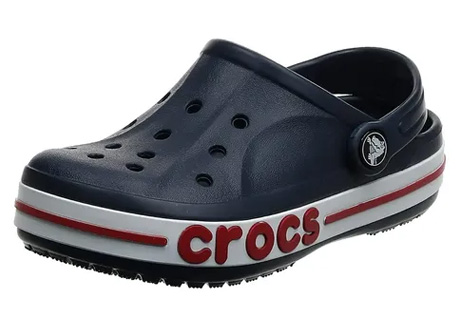 On 24 October 2022, the Spanish company Gor Factory, S.A. filed an application before the EUIPO seeking a declaration of invalidity of the registered EU design, whose registration application had been filed on 22 November 2004. The grounds invoked for invalidity were those set out in Article 25(1)(b) of Regulation (EC) No 6/2002, in conjunction with Articles 4 and 6 of that Regulation. Specifically, Gor Factory argued that the contested design lacked individual character in light of the “Holey Soles” clog design, which had been made available to the public prior to the priority date of the Crocs design.
By decision of 22 January 2024, the Cancellation Division upheld the application for invalidity, finding that the contested design lacked individual character within the meaning of Article 6 of Regulation No. 6/2002. Subsequently, Crocs filed an appeal, but the Third Board of Appeal of the EUIPO dismissed it. In particular, it held that: (i) the earlier design had been disclosed to the public on 13 and 14 April 2003, prior to the priority date of the contested design (28 May 2004); (ii) the products at issue were identified as “footwear, in particular clogs”; (iii) the informed user was deemed to display a relatively high degree of attention; (iv) the designer’s degree of freedom in relation to clogs was considered high; and (v) the contested design lacked individual character, as it produced the same overall impression as the earlier design.
In light of the foregoing, Crocs sought before the GC the annulment and alteration of the contested decision or, in the alternative, its annulment and referral of the matter back to the EUIPO, as well as an order requiring the EUIPO to bear the costs.
First, the CG recalled that, according to settled case law, it is not for the Court to issue instructions to the EUIPO; rather, it is for the EUIPO itself to draw the appropriate conclusions from the operative part and the grounds of the judgments delivered by the EU courts. Accordingly, the request to refer the matter back to the EUIPO was rejected on the grounds of lack of jurisdiction.
In support of its appeal, Crocs relied on a single plea alleging infringement of Article 6 of Regulation No 6/2002 concerning the individual character of the design. Under Article 6(1)(b) of Regulation No 6/2002, a registered Community design has individual character if the overall impression it produces on the informed user differs from that produced by any earlier disclosed design. First, it criticises the Board of Appeal for having incorrectly found that the designer’s degree of freedom in the case of clogs was high. Second, it submits that the Board of Appeal did not sufficiently take into account, when comparing the overall impressions, the contribution to the individual character arising from the distinctive heel strap of the contested design.
The GC recalls the applicable legal criterion: under Article 6(1)(b) of Regulation No 6/2002, a registered design has individual character if the overall impression it produces on the “informed user” differs from the overall impression produced by any earlier design disclosed to the public before the date of filing or, where priority is claimed, before the date of priority. In addition, pursuant to Article 6(2), the designer’s degree of freedom must be taken into account in that assessment. On the basis of the structure of that provision, the General Court explains that the assessment of individual character is generally carried out in four stages: identifying the sector of the products to which the design belongs; defining the informed user and their level of attention and knowledge of the prior art; assessing the degree of freedom of the designer (the impact of which is inversely proportional); and, finally, comparing —preferably directly— the overall impressions produced by the contested design and each earlier design considered individually.
As preliminary observations, the GC (General Court of the European Union) notes that it is undisputed that the earlier design was made available to the public, within the meaning of Article 7(1), in April 2003, prior to the priority date claimed for the contested design (May 2004). It is also undisputed that the relevant sector is footwear and, more specifically, clogs, and that the informed user of such products pays a relatively high degree of attention when using them.
The GC first addresses the degree of freedom of the designer, recalling that this depends on any technical or regulatory constraints that may limit the product’s design. Although the applicant argues that, in the case of clogs, this freedom is of a medium level due to certain essential features (such as the rounded shape, the open heel, and the flat sole), the GC considers that these limitations are essentially functional and do not significantly restrict creativity. It therefore concludes that the designer has a wide margin to vary materials, colours, patterns, and structural elements, confirming that the degree of freedom in this sector is high.
With regard to the comparison of overall impressions, the GC emphasises that the individual character of a design must be assessed in a global and synthetic manner, taking into account the perception of the informed user and disregarding minor or similar differences resulting from technical requirements. In the present case, the Board of Appeal found that both clog designs shared essential features such as the overall shape, the thick sole, the closed toe, and the arrangement of holes and cut-outs. It therefore concluded that they produced the same overall impression. The Court upholds this assessment and rejects the argument that elements from different designs were improperly combined in the comparison, stating that the analysis was correctly carried out between the two models, each considered individually.
Finally, the GC examines the arguments concerning the back strap as a distinguishing feature. Although it acknowledges that this element exists and may be perceived by the informed user, it considers its relevance to be secondary in light of the near-total identity of the overall configuration of the footwear. It also clarifies that the designer’s degree of freedom is not an autonomous criterion determining the outcome, but rather a factor that influences the overall assessment, and that aspects such as notoriety or commercial success are not legally relevant. Consequently, the Court concludes that the presence of the strap is not sufficient to create a different overall impression, since the informed user will still perceive both designs as essentially identical.
Finally, the GC rejects Crocs’ reliance on a decision of the United States Patent and Trademark Office, recalling that the EU design system is an autonomous regime applied independently of any national or third-country systems. The legality of decisions of the Boards of Appeal must be assessed solely on the basis of Regulation No 6/2002.
In view of all the foregoing, the GC dismisses the single plea in law as unfounded and, consequently, rejects the action in its entirety. It therefore confirms that Crocs’ registered design lacks individual character in relation to the earlier “Holey Soles” design, as both produce the same overall impression on the informed user. The only difference between them—the back strap—is regarded as an accessory element insufficient to differentiate them. The high degree of design freedom in the clog footwear sector further reinforces the requirement for more significant differences in order to establish individual character, which is not met in this case.