
TJUE – Critical edition-Prof.Slușanschi
Copyright protection of critical editions of public domain works. A critical edition may be considered a protected work even if its purpose is to reconstruct a pre-existing work, provided that it includes adaptations, additions, commentary, and critical apparatus that form a coherent whole.
The judgment of the Court of Justice of the European Union (hereinafter, CJEU) of March 19, 2026, in Case C-649/23, addresses a matter of great importance in the field of copyright law: the possibility that a critical edition of a work that has entered the public domain may qualify as a “work” protected by copyright within the meaning of Article 2(a) of Directive 2001/29/EC.
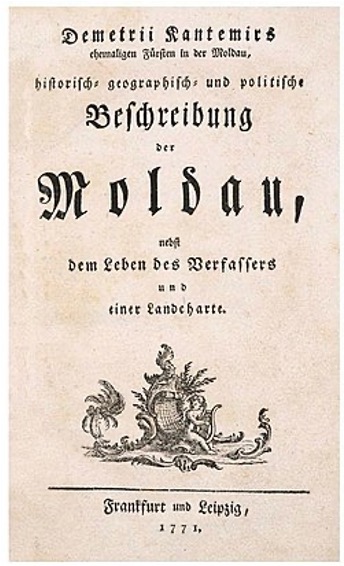 The main proceedings oppose, on the one hand, the Institutul de Istorie și Teorie Literară G. Călinescu and the Fundația Națională pentru Știință și Artă (hereinafter, the Călinescu Institute) and, on the other hand, TB and VP, the heirs of Professor Dan Slușanschi, author of a critical edition of a historical work written in Latin by Dimitrie Cantemir in the early 18th century that had entered the public domain. However, the critical edition prepared by Professor Slușanschi involved reconstructing the text from manuscripts, introducing corrections and additions, as well as incorporating comments, critical notes, and explanations intended to make the text intelligible and to justify the editorial choices made.
Following Professor Slușanschi’s death in 2013, his heirs, TB and VP, authorized the Călinescu Institute to use the transcriptions and translations he had made of several works by Dimitrie Cantemir, including his critical edition—materials that the institute made available to the FNSA, which in 2015 published a bilingual Latin-Romanian edition of one of those works incorporating said text. In response, the Professor’s heirs filed a lawsuit for infringement of the copyright of the Slușanschi critical edition.
The Bucharest District Court issued a ruling in 2017 finding that the FNSA had reproduced the Slușanschi critical edition in its entirety, including the author’s unpublished corrections and additions, while merely mentioning him in footnotes, which constituted a violation of both his moral right to be recognized as the author and the economic rights of his heirs, TB and VP. Consequently, the court ordered the Călinescu Institute and the FNSA to pay compensation for the moral and material damages caused.
Following the confirmation of the first-instance judgment by the Bucharest High Court, both entities filed an appeal with the Supreme Court of Romania, arguing that a critical edition does not involve sufficient free and creative decisions due to the editor’s limited freedom when faithfully reconstructing a scientific work in Latin, which led the referring court to question whether a critical edition can be considered a “work” within the meaning of Directive 2001/29.
The referring court recalls that, pursuant to Article 2(3) of the Berne Convention, translations and other adaptations of a literary work may be protected as original works without prejudice to the rights of the author of the original work, pointing out that the original Latin work at issue in the dispute unquestionably constitutes a literary work, as it is a scientific production. However, it clarifies that for a critical edition such as the Slușanschi edition to benefit from such protection, it must qualify as a “transformation” of the original work. In this regard, it emphasizes that, although the referring court is not a contracting party to the Berne Convention, the Union is bound to respect it under the WIPO Copyright Treaty, the implementation of which is governed by Directive 2001/29. Since the Court of Justice has not yet ruled on whether, and under what conditions, a critical edition may be considered a “work” within the meaning of EU law, the Romanian Supreme Court decided to stay the proceedings and refer a question to the CJEU for a preliminary ruling to clarify whether a critical edition accompanied by commentary and critical apparatus may be protected by copyright:
"Should Article 2(a) of Directive 2001/29 be interpreted as meaning that a critical edition of a work, the purpose of which is to establish, through analysis of the manuscript, the text of an original work, accompanied by commentary and the necessary critical apparatus, may be considered a work protected by copyright?"
The CJEU first notes that Directive 2001/29 does not refer to national law for the definition of the concept of “work”; therefore, this concept must be interpreted autonomously and uniformly throughout the Union (judgment of November 13, 2018, Levola Hengelo, C‑310/17, EU:C:2018:899, paragraph 33). According to its settled case law, that concept requires the fulfillment of two cumulative conditions:
- the existence of an original subject matter, in the sense that it constitutes an intellectual creation of the author, reflecting his or her personality through free and creative decisions; and
- the existence of an object that can be identified with sufficient precision and objectivity, so that the scope of protection can be clearly determined.
Applying these criteria, the CJEU notes that a critical edition can only be considered original if its creation is not entirely determined by technical rules or strict imperatives and if the author has been able to make free and creative decisions that confer uniqueness on the work through the selection, arrangement, and combination of the text, the commentary, and the critical apparatus (judgment of September 12, 2019, Cofemel, C‑683/17, EU:C:2019:721, paragraphs 30 and 31).
In the case of the Slușanschi’s critical edition, it is not limited to a mere transcription of the original manuscript, but seeks to reconstruct the text through corrections and additions to make it complete, intelligible, and faithful to the original author’s intent, while also incorporating commentaries, critical notes, and explanations that constitute an intellectual creation on their own right; therefore, unless it is shown that its creation was based exclusively on technical considerations without any creative scope, that critical edition apparently meets the requirement of originality, a matter whose final assessment falls to the referring court.
Finally, the CJEU clarifies that a protected work must be identifiable with precision and objectivity, in order to ensure legal certainty for both, authorities and third parties, and considers that a critical edition may meet this requirement even if its purpose is to reconstruct a pre-existing work, provided that it includes adaptations, additions, comments, and critical apparatus that form a coherent whole. In this regard, it is not necessary to separate the original text from the critical notes to determine which parts are protected, since the critical edition can be viewed as an identifiable whole. If such an edition constitutes an original intellectual creation, it must enjoy full copyright protection, including against partial reproductions of its creative elements, without this implying the privatization of the original work in the public domain.
Therefore, the CJEU concludes that a critical edition of a work in the public domain may be classified as a “work” within the meaning of Directive 2001/29, provided that it reflects the author’s free and creative decisions and is identifiable with sufficient precision and objectivity. However, the CJEU notes that the recognition of copyright in a critical edition does not deprive the original work of its public domain status, nor does it grant the editor a monopoly over it. Protection is limited to the elements that constitute the editor’s own intellectual creation.