
VALCAVADA belongs to no one
The ruling of the First Chamber of the Supreme Court dated February 3, 2026 (appeal no. 1309/2022) resolves the extraordinary appeals for procedural violation and cassation filed by Grupo Solar de Samaniego S.L. (hereinafter, Samaniego) against Bodegas Herederos de Perfecto Martínez S.L. (hereinafter, Perfecto Martínez), regarding the use of the name “Valcavada” on wines produced by both wineries. The dispute arises because Samaniego has been the owner of the word mark VALCAVADA since 2005, while Perfecto Martínez registered the mark “1808 Temperamento Natural Valcavada Singular Vineyard” in 2016 to market a wine also sourced from vineyards located in Laguardia, Álava.
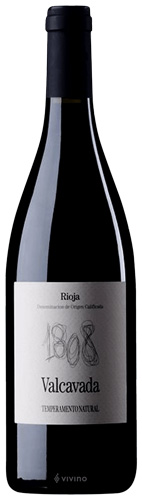
 Samaniego filed a lawsuit seeking a declaration that the defendant had infringed its trademark rights through the use of the term “Valcavada,” requesting the cessation, withdrawal, and destruction of products; the removal of references from the website and social media; compensation for actual damages (€826.55); compensation for lost profits based on 1% of turnover or, where applicable, of the profit obtained during the previous five years, as well as daily compensation of €600 until the effective cessation of the infringement, in addition to the cancellation of registration number 3603122.
At first instance, Bilbao Commercial Court No. 2 partially upheld the claim. It found that the use of the sign “1808 Valcavada” constituted an infringement of the VALCAVADA trademark and declared the defendant’s trademark invalid. However, it did not award any compensation due to a lack of proof of actual damages or lost profits. On appeal, the Provincial Court of Bizkaia fully upheld Perfecto Martínez’s appeal and reversed the first-instance judgment. The Provincial Court found that there was no likelihood of confusion or intent to take advantage of the prestige of Samaniego’s trademark, highlighting the clear differences between the two products.
In light of the foregoing, Samaniego filed an extraordinary appeal for procedural violation, arguing, in summary, that the Provincial Court had failed to rule on its claim regarding the improper exploitation of the reputation of the “Valcavada” trademark. In its view, this omission constituted a violation of its right to effective judicial protection. It further argued that the ruling contained an internal contradiction by treating “Valcavada” both as a distinctive sign and as a mere geographical designation. Similarly, he alleged a manifest error in that the judgment attributed to him admissions regarding third-party products that he had never made. He also accused the court of unduly imposing on him the burden of proving how competitors perceived the term “Valcavada,” thereby violating the provisions of Article 217 of the Civil Procedure Act (LEC) and, once again, his fundamental right to effective judicial protection. Finally, it argued that the Provincial Court had erroneously assessed the defendant’s wine labeling by downplaying the significance of the term “Valcavada,” which—in its view—should be considered the predominant element of the trademark.
In parallel, it filed an appeal in cassation in which it criticized the Provincial Court for an incorrect application of the Trademark Law. It argued that the court had compared the actual uses of the signs, rather than comparing registered signs, and that it had not properly applied the case law on the likelihood of confusion in nullity proceedings. He added that the possible unfair exploitation of his trademark’s reputation had not been assessed in accordance with the doctrine of the CJEU, and that the Provincial Court had erred in applying Article 8.1 of the Trademark Law by relying on market practices rather than on the structure of the trademarks. Finally, he complained that the defense of legitimate use provided for in Article 37 of the Trademark Law had not been properly examined.
Regarding the extraordinary appeal for procedural violation, the Supreme Court first addresses the allegation of omissive inconsistency and concludes that no such violation exists. It notes that acquittal judgments—such as that handed down by the Provincial Court—can hardly be inconsistent, since by dismissing the plaintiff’s claims in their entirety, they implicitly address all of them. Thus, the Supreme Court rejects the allegation that the Provincial Court failed to rule on the alleged unfair exploitation of the reputation of the “Valcavada” trademark, noting that the overall dismissal of the complaint necessarily entails the dismissal of that claim.
Regarding the alleged contradiction in the assessment of the evidence—as the appellant contends that the Provincial Court considered “Valcavada” both as a distinctive sign and as a place name—the Supreme Court clarifies that there is no incompatibility whatsoever, given that the coexistence of a term’s distinctive function and its geographical origin is perfectly possible. The Provincial Court, as explained by the Supreme Court, merely noted that Valcavada is a real place and, at the same time, an integral element of a complex word mark, without thereby committing a contradiction or a manifest error. The Supreme Court notes that the latter can only be found in cases of a factual error that is evident and immediately verifiable, a circumstance that does not apply to legal reasoning regarding the distinctiveness of a place name.
Nor does the complaint regarding the burden of proof hold up. The Supreme Court emphasizes that the Provincial Court did not apply Article 217 of the Civil Procedure Law (LEC) nor did it base its decision on a lack of evidence attributable to Samaniego, but rather on the assessment of the available evidence, which excludes any violation of the rules governing the distribution of the burden of proof. Furthermore, the Supreme Court emphasizes that it is contradictory to simultaneously assert an error in the assessment of the evidence and a violation of Article 217 of the Civil Procedure Act (LEC), since the latter applies only in the absence of sufficient evidence, not when the court has conducted a specific assessment. Finally, the Supreme Court rejects the claim that the Provincial Court incorrectly assessed the labeling: it maintains that its assessment—according to which the distinctive character of the defendant’s sign does not rest on the term “Valcavada”—is a reasoned legal conclusion, based on the geographical reality of the place name and the complex structure of the mark under analysis, and that any discrepancy with said assessment falls, if applicable, within the scope of the appeal in cassation, not that of procedural violation.
As for the alleged contradiction between considering “Valcavada” a distinctive sign and a place name, the Court clarifies that both dimensions are perfectly compatible: the fact that a term has a geographical origin does not prevent it from forming part of a trademark, and the Court of Appeal merely noted this dual status without committing any error. Nor does the Supreme Court find the manifest error invoked by Samaniego, given that the appellant has not established the existence of an evident and immediately verifiable factual contradiction.
The Court also dismisses the arguments regarding the violation of the rules on the burden of proof. It emphasizes that the Regional Court did not rule based on a lack of evidence attributable to Samaniego, but rather on the basis of its own assessment of the evidence presented, which precludes any violation of Article 217 of the Civil Procedure Act. Finally, it also rejects the criticism regarding the assessment of the labeling: the Court of Appeal found—from an overall perspective—that the distinctive weight of the defendant’s trademark rested primarily on the element “1808” and on the complex structure of the sign, without the use of the term “Valcavada” in lowercase letters having sufficient strength to create a likelihood of confusion. The Supreme Court thus concludes that there is no procedural violation.
On appeal, Samaniego argued that the Provincial Court had erroneously analyzed the likelihood of confusion by comparing the actual uses of the signs rather than the registered trademarks, thereby violating Articles 34.2.b) and 6.1.b) of the Trademark Law. The Supreme Court rejects these grounds, noting that the comparison must be made comprehensively—visually, phonetically, and conceptually—and that, in this case, the structural difference between “VALCAVADA” and “1808 Temperamento Natural Valcavada Singular Vineyard” precludes any relevant similarity. The term “Valcavada,” being a place name, has little distinctiveness and does not cause confusion among the average consumer.
Samaniego also alleged a violation of Articles 34.2.c) and 8.1 of the Trademark Law, arguing that the Provincial Court failed to adequately assess an alleged unfair exploitation of the reputation of its trademark. The Supreme Court rejects this claim because no reputation was established, which precludes the application of the enhanced protection provided for well-known trademarks. The use of the place name by other wineries in the same area is legitimate and cannot be monopolized.
Finally, the ground of appeal relating to Article 37 of the Trademark Law—the exception for legitimate use—is also dismissed, since, in the absence of infringement or a likelihood of confusion, there is no need to analyze limitations or exceptions. Furthermore, in accordance with established case law, geographical names may be used by any operator in the area provided that the composite trademark does not cause confusion.
In summary, the Supreme Court concludes that none of the grounds for cassation can succeed, because there is no similarity between the signs, there is no proven reputation, and the term “Valcavada” is a place name whose use cannot be subject to a monopoly. For all these reasons, the Supreme Court dismisses the extraordinary appeal for procedural infringement and the appeal filed by Samaniego against Judgment No. 1208/2021, dated July 14, handed down by the Provincial Court of Vizcaya, Section 4, in Appeal No. 799/2021.